Table of contents
What can go in the recycling bin? The safest answer is: follow your local recycling program’s list. Recycling rules vary by city, and an item accepted in one community may be rejected in another. When in doubt, check your hauler’s website or ask before placing it in the bin.
Check local rules first
Look for an accepted-materials guide from your city, county, or waste company. The guide should explain which plastics, paper grades, metals, and cartons belong in curbside recycling. The chasing-arrows symbol alone does not guarantee that your local program accepts an item.
Recycling systems are designed around the equipment and markets available in each region. A material can be technically recyclable but still be excluded locally because there is no safe or economical way to sort and sell it.
Items often accepted
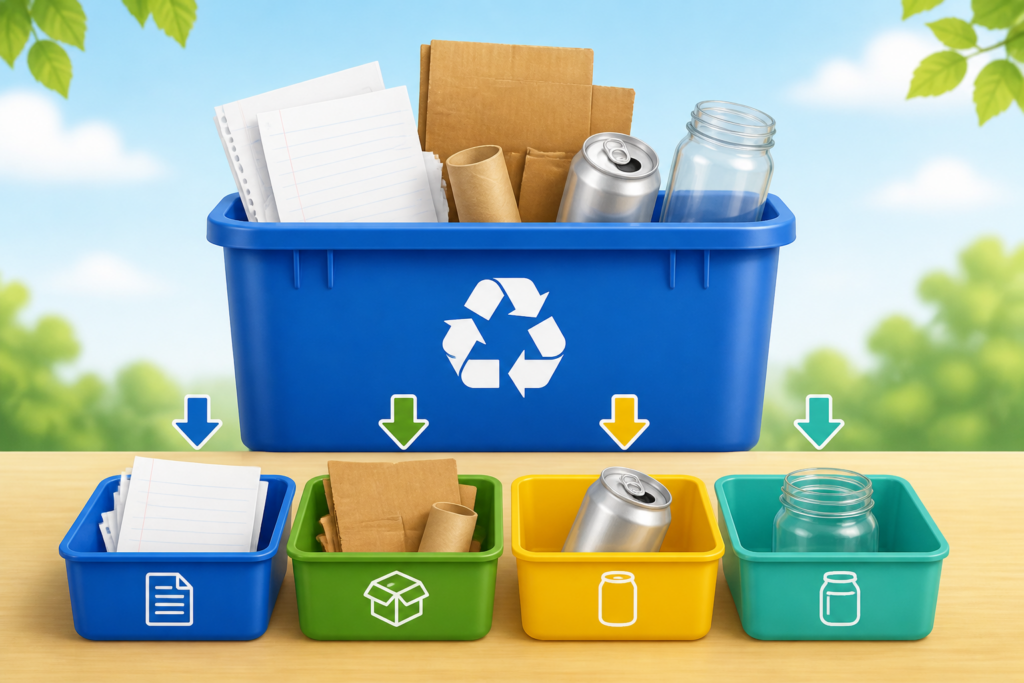
Many programs accept clean, empty paper and cardboard, such as newspapers, office paper, cereal boxes, and shipping cartons. Flatten boxes when possible. Aluminum and steel food cans are commonly accepted, along with glass bottles and jars in communities that collect glass.
Some programs accept plastic bottles, jugs, and containers. Rinse out food residue, replace caps according to local instructions, and never place a container filled with liquid in the bin. Follow the local list for plastic-number limits because accepted types differ.
Items to keep out
Do not put loose plastic bags, food scraps, liquids, batteries, paint, motor oil, chemicals, or medical sharps in a regular recycling bin unless your program specifically says so. These items can injure workers, damage sorting equipment, or contaminate otherwise usable material.
Food-soiled paper, greasy pizza boxes, and disposable cups may need composting or trash disposal depending on local rules. Keep hoses, cords, and clothing out of curbside recycling because they can tangle machinery. Never bag recyclables unless the program requires it.
How to prepare recyclables
Empty and lightly rinse containers, then let them drain. Remove leftover food and liquids. Keep paper dry, flatten cardboard, and place small pieces inside a larger paper container so they do not blow away. Do not crush cans or bottles unless your local guide recommends it.
When asking what can go in the recycling bin, remember that “wish-cycling”—adding an item because you hope it is recyclable—usually causes more harm than good. A wrong item can contaminate a whole load.
Special drop-off items
Electronics, batteries, plastic film, textiles, fluorescent bulbs, and household chemicals often need special collection sites. Your city’s waste department, retailer take-back program, or the U.S. EPA’s recycling resources can point you to the right location.
For a broader explanation, read What is recycling? and browse the Everyday Things category.
Recycling works best when materials are kept clean, dry, and loose. Before you decide what can go in the recycling bin, check whether your community uses single-stream collection or asks residents to separate paper, glass, and containers. Local instructions may also specify whether caps should stay on bottles, whether cardboard must be bundled, and whether glass is collected at the curb. If your program rejects an item, look for a reuse, repair, composting, or special drop-off option before sending it to the trash. These small checks prevent contamination and help the material reach a facility that can actually process it.
When an item is uncertain, check the local recycling program instead of guessing. Rules vary by community, and putting the wrong material in the bin can contaminate otherwise recyclable loads.
Related questions
- Can pizza boxes be recycled?
- Should you rinse cans before recycling?
- Where can you recycle batteries?
- Why are plastic bags not accepted curbside?