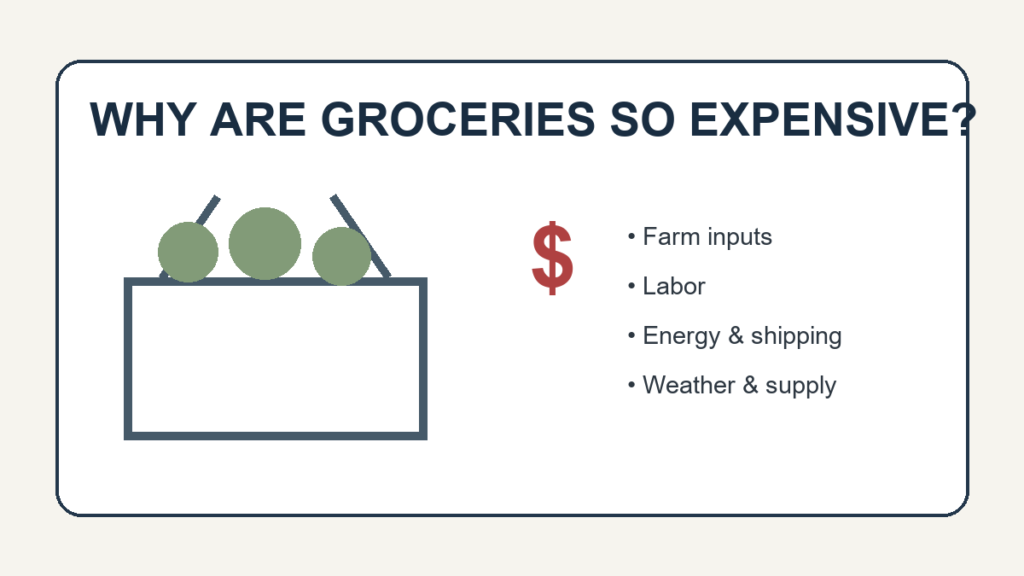
Why are groceries so expensive? Grocery prices reflect costs all along the food chain: farms and ingredients, processing, wages, energy, packaging, transportation, wholesale distribution, and retailing. Weather, animal disease, supply disruptions, and changing demand can push particular foods higher too. And when inflation slows, that usually means prices are rising more slowly—not that they return to their old levels.
Table of Contents
Why Are Groceries So Expensive? The Short Answer
There is no single grocery-price switch. The USDA Economic Research Service explains that retail food prices are influenced by commodity prices as well as processing, transportation, wholesale and retail costs. The Bureau of Labor Statistics measures these changes in the Consumer Price Index category called “food at home.”
That also means “groceries” are not one market. Beef, eggs, coffee, cereal and vegetables have different supply chains and can move in different directions at the same time.
1. Farm and Ingredient Costs Change
Food starts with agricultural commodities and other inputs. Feed, fertilizer, seed, livestock, crops and packaging materials all contribute to the cost of producing food. A jump in one important input can eventually reach processors, distributors and stores.
But a 10% increase in a farm commodity does not automatically mean a 10% increase at the checkout. USDA notes that the farm value is only part of the retail food dollar; many post-farm activities also contribute to what consumers pay.
2. Labor Costs Matter at Every Stage
Workers plant and harvest crops, process meat, manufacture packaged foods, drive trucks, operate warehouses and stock grocery shelves. Changes in wages, benefits and staffing costs can therefore affect several stages of the supply chain.
Labor is not the only explanation for higher prices, but it is one component of the cost of turning raw agricultural products into food that is ready to buy.
3. Energy, Packaging and Transportation Add Costs
Food often has to be refrigerated, processed, packaged, stored and transported. Fuel and electricity prices can affect those operations. So can the cost of cardboard, plastic, glass and other packaging.
The effect varies by product. A locally produced shelf-stable item has a different cost structure from seafood flown long distances or frozen food kept cold throughout distribution.
4. Weather and Animal Disease Can Shrink Supply
Droughts, floods, freezes, heat and other weather events can reduce crop yields or disrupt production. Animal diseases can reduce supplies of livestock products. When supply falls while demand remains strong, prices can rise.
Egg prices are a useful example of why individual grocery items sometimes behave very differently from overall food inflation: outbreaks affecting laying hens can sharply reduce egg supply even when many other grocery categories are relatively stable.
5. Supply-Chain Disruptions Can Ripple Through Stores
Food supply chains depend on farms, factories, ports, warehouses, trucks and retailers. A disruption at one stage can create shortages, delays or higher costs elsewhere.
During broad disruptions, several pressures can happen at once: ingredients may become harder to obtain, shipping may cost more, factories may operate below capacity, and consumers may change what they buy. Those overlapping effects can amplify price movements.
6. Why Are Groceries So Expensive Even When Inflation Slows?
This is one of the most confusing parts of inflation. If grocery inflation falls from 8% to 2%, grocery prices have not necessarily fallen. They may simply be increasing at a slower rate.
For prices to actually decline, the price index for food at home has to fall. Slower inflation only reduces the speed of the increase. That is why a grocery bill can still feel expensive long after the fastest period of inflation has ended.
This distinction is explained more broadly in Why Does Inflation Happen?
7. Some Foods Get More Expensive While Others Get Cheaper
BLS publishes indexes for individual food categories because price movements differ. Meat can face different supply pressures from fruit; coffee can be affected by conditions in major producing countries; dairy has its own production economics.
Substitution also matters to household budgets. Even when the overall grocery index rises, shoppers may find specific products whose prices are stable or falling and adjust what they buy.
Are Grocery Stores Simply Raising Prices?
Retail pricing and margins are part of the final price, but grocery prices cannot be explained by one factor alone. The retail price incorporates costs and decisions across producers, processors, distributors and sellers. Competition, consumer demand and market conditions can influence how much of a cost increase is passed along and how quickly.
Claims that any single cause explains all grocery inflation should therefore be treated cautiously. Different foods, companies, regions and time periods can have different causes.
Why Are Groceries So Expensive Right Now?
Why are groceries so expensive right now? The answer at any particular moment depends on the latest data. BLS publishes monthly food-at-home inflation figures, while USDA publishes food-price forecasts and analysis by category. Those sources are more useful than assuming every food is rising for the same reason.
Interest rates can affect the broader economy but do not directly set supermarket prices. For that distinction, see Why Do Interest Rates Go Up?
Frequently Asked Questions
Will grocery prices ever go back down?
Some individual foods regularly fall in price, but a slowdown in inflation does not itself return the overall price level to where it was. Prices can remain high while increasing more slowly.
Why are eggs suddenly so expensive?
Egg prices can be especially sensitive to changes in flock size, feed and production costs, and outbreaks of highly pathogenic avian influenza that reduce the number of laying hens.
Why do grocery prices vary so much by store?
Stores can have different suppliers, operating costs, product mixes, promotions, private-label strategies and pricing decisions. Location and local competition can also matter.
Are food prices the same thing as inflation?
No. Food at home is one component of the Consumer Price Index. Overall inflation also includes housing, transportation, medical care and many other goods and services.
Why Are Groceries So Expensive? Bottom Line
Why are groceries so expensive? Because the shelf price reflects a long chain of costs and market conditions rather than one cause. Agricultural inputs, labor, energy, transportation, weather, disease and supply disruptions can all matter, and the mix changes from product to product.
Most importantly, falling inflation is not the same as falling prices. A slower rate of food inflation can leave shoppers paying much more than they remember from several years earlier.