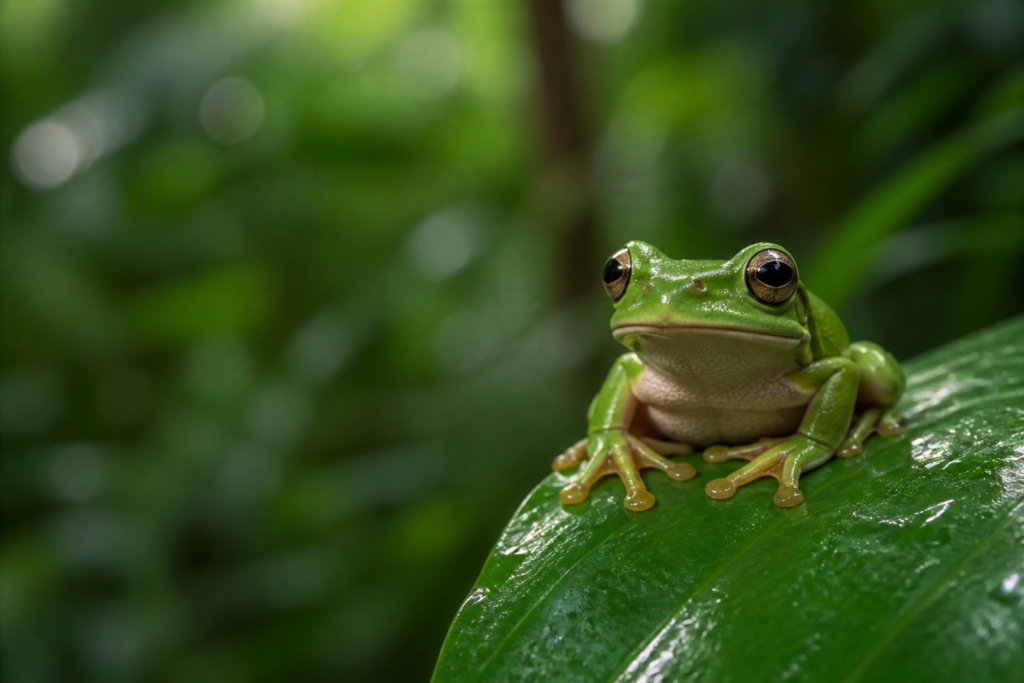
How do frogs protect themselves? Frogs protect themselves with camouflage, quick jumps, hiding places, warning colors, defensive secretions, and behaviors that make predators hesitate. Different species use different combinations, and a frog’s best defense depends on its habitat and the predator nearby.
How do frogs use camouflage?
Many frogs blend into leaves, bark, mud, grass, or water. Their colors and patterns break up the outline of the body, making them harder for birds, snakes, fish, and mammals to spot. A frog may remain still for a long time and move only when danger passes.
How do frogs escape predators?
Strong back legs let frogs jump quickly and unpredictably. Some leap into water, while others disappear into leaf litter, cracks, or dense plants. A frog may also change direction suddenly or freeze so a predator loses track of it. Smooth skin can make the animal difficult to hold.
Do frog colors warn predators?
Bright colors can warn that a frog tastes bad or has irritating skin secretions. Not every colorful frog is dangerous, and not every dull frog is harmless, so people should never handle an unknown wild frog. Some harmless species resemble defended species, a strategy called mimicry.
What other defenses do frogs use?
Some frogs puff up, play dead, release a bad-tasting substance, or make a startling sound. Certain species hide their legs and body in a defensive posture. A frog may also use a narrow crack, thorny plant, or muddy bank as a refuge that a predator cannot easily enter.
Why do frogs use more than one defense?
A frog rarely depends on just one trick. Camouflage may keep it from being noticed in the first place. If a predator gets too close, the frog can switch to a second defense such as freezing, jumping, swimming, hiding in a crevice, or using a startling posture or sound. The combination matters because different predators hunt in different ways. A defense that works against a bird in open vegetation may not work as well against a snake moving through leaf litter.
This layered approach also explains why frog defenses vary so much from species to species. A tree frog may rely heavily on color and climbing, while a pond frog may escape by leaping into water. The habitat gives each frog different places to hide and different escape routes.
Are frog skin secretions dangerous?
Frog and toad skin contains glands that help keep the skin moist, and some species also produce defensive chemicals. These secretions can taste bad, irritate a predator, or in some species act as toxins. The strength varies widely, so a bright or unusual-looking frog should never be assumed to be harmless. For people, the safest rule is simple: enjoy wild frogs without handling them unless there is a real need to move one out of danger, and wash your hands afterward.
How can people avoid harming frogs?
Watch frogs without chasing or touching them. Keep pets away from breeding ponds, protect leaf litter and native plants, and avoid pesticides near water. For related explanations, read where frogs live and what a frog is.
How do frogs protect themselves at night?
At night, darkness and vegetation can hide frogs from predators. Some species choose damp shelters, while others rely on colors that match the ground or leaves. How do frogs protect themselves in changing weather? They may move toward water, burrow into soil, or become less active until conditions improve.
How do frogs protect themselves from larger animals? They combine stillness, camouflage, sudden movement, and escape routes. No single defense works every time, so a frog’s survival depends on using the right behavior at the right moment.
Keep wondering
Why do frogs make sounds, what do frogs eat, and why do frogs need water?