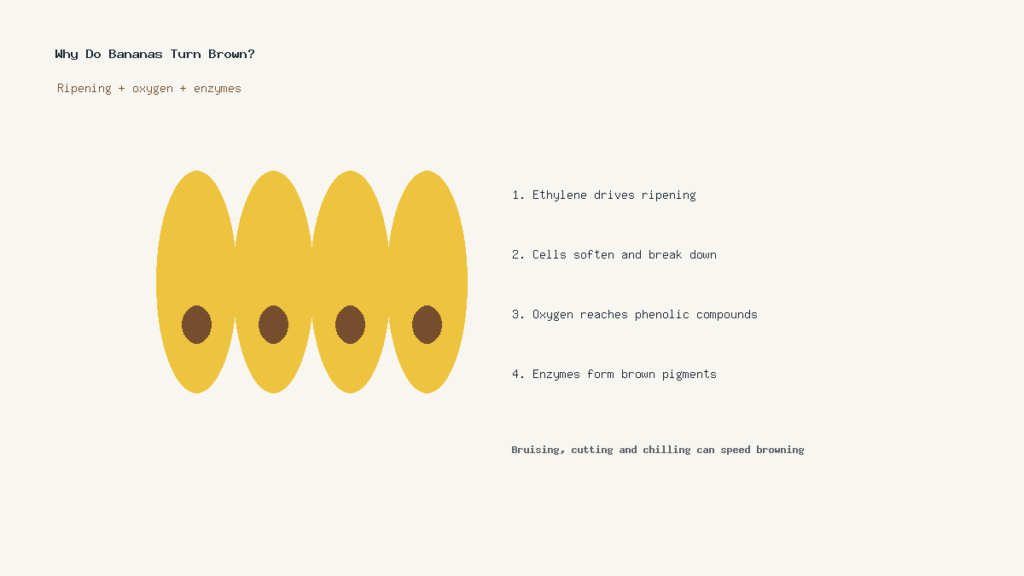
Why do bananas turn brown? Bananas brown because ripening and cell damage expose natural compounds to oxygen. Enzymes—especially polyphenol oxidase—help turn those compounds into brown pigments. Ethylene, the fruit’s own ripening hormone, speeds the changes that make a banana softer, sweeter and eventually brown.
The brown color does not come from one single process. The peel changes as the fruit ripens, while bruising, cutting and chilling can damage cells and make browning more obvious.
Table of Contents
Why Do Bananas Turn Brown?
To understand why bananas turn brown, start with ripening. Bananas are climacteric fruits, meaning they continue to ripen after harvest and show a burst of respiration and ethylene production during ripening. Ethylene acts as a plant hormone and helps coordinate changes in color, texture, aroma and sweetness.
As ripening progresses, green chlorophyll in the peel breaks down and yellow pigments become visible. Later, cell membranes become less intact. When oxygen reaches phenolic compounds inside damaged cells, polyphenol oxidase can catalyze reactions that ultimately produce dark pigments. This is called enzymatic browning.
What Happens as Bananas Ripen?
A green banana contains lots of starch. During ripening, enzymes convert much of that starch into sugars, which is one reason ripe bananas taste sweeter. The fruit also softens as its cell walls change.
- Green: more starch, firmer texture and less sweetness.
- Yellow: more sugar, softer texture and stronger banana aroma.
- Brown-spotted: advanced ripening, with softer flesh and more visible pigment changes.
- Very brown: the fruit is highly ripe and increasingly vulnerable to spoilage.
Brown spots therefore often accompany normal ripening. They are not, by themselves, proof that a banana is spoiled.
Why Do Cut Bananas Turn Brown?
Cutting or bruising a banana physically breaks cells. Substances that were separated inside those cells can then mix, and oxygen from the air reaches them. Polyphenol oxidase accelerates oxidation reactions, creating compounds that polymerize into brown pigments.
This same broad type of enzymatic browning occurs in fruits such as apples and pears. It explains why a freshly sliced banana can darken much faster than an undamaged one.
Why Do Bananas Turn Brown in the Fridge?
Bananas are tropical fruit and are sensitive to low temperatures. Refrigeration can injure peel cells and cause the skin to darken quickly. That dark peel does not necessarily mean the flesh inside has spoiled.
For an already-ripe banana, refrigeration can slow some ripening processes even while the peel becomes unattractively brown. Green bananas are generally better allowed to ripen at room temperature first.
How Can You Slow Banana Browning?
You cannot stop ripening forever, but you can slow some of the processes involved.
- Keep unripe bananas at room temperature. Let green fruit ripen before chilling it.
- Reduce bruising. Damaged cells brown more readily.
- Refrigerate ripe bananas if you need more time. The peel may darken, but chilling can slow further ripening.
- For cut banana, limit oxygen exposure. Covering pieces and using acidic fruit juice such as lemon juice can slow enzymatic browning.
Are Brown Bananas Safe to Eat?
A brown peel alone is usually a sign of advanced ripening or chilling injury, not a food-safety test. A very ripe banana may still be useful for baking because it is soft and sweet. Discard fruit that shows clear signs of spoilage such as mold, leaking decay or an obviously rotten odor.
Frequently Asked Questions
What enzyme makes bananas turn brown?
Polyphenol oxidase is a major enzyme involved in enzymatic browning. When damaged banana tissue is exposed to oxygen, the enzyme helps drive reactions that lead to brown pigments.
Why do bananas turn brown so fast after peeling?
Peeling and slicing expose more tissue to oxygen and can damage cells, bringing the enzyme and its substrates together. That speeds visible browning.
Does a brown banana have more sugar?
As a banana ripens, enzymes convert starch into sugars, so a ripe banana generally tastes sweeter than a green one. Browning is associated with advanced ripening, but color alone is not a precise measurement of sugar content.
The Short Answer
Why do bananas turn brown? Ripening, oxygen and cell damage allow enzymes to produce brown pigments. Ethylene drives ripening, while bruising, cutting and cold injury can accelerate or intensify visible browning.
For another kitchen-science question, read why onions make you cry, or browse Food & Cooking.