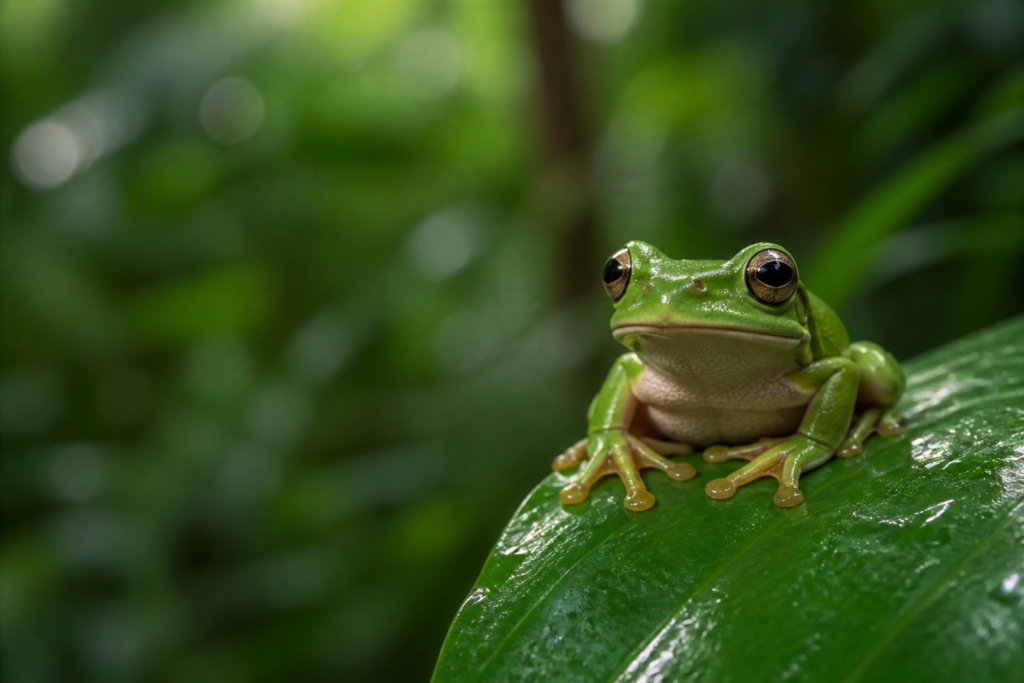
Why do frogs make sounds? Frogs make sounds mainly to communicate with other frogs. Males of many species call to attract mates, but frogs may also call when defending territory, warning of danger, or responding to rain and nearby calls. Each species has its own sound.
Why do frogs call for mates?
A male frog’s call helps a female identify a suitable mate of the same species. Calls can reveal location, size, and breeding condition. Females may choose among several callers. This is why ponds can become noisy after rain or during a warm breeding season.
How do frogs make sounds?
Most frogs push air from their lungs across the vocal cords and use a flexible vocal sac to amplify the sound. The sac may expand under the throat or at the sides of the mouth. Body size, temperature, and the shape of the call all affect how it sounds to a listener.
Do all frogs sound alike?
No. Calls range from chirps and peeps to croaks, trills, whistles, and grunts. A frog’s call is shaped by its species, sex, age, habitat, and the surrounding temperature. Field guides and wildlife agencies often use calls to help identify local frogs.
What other sounds do frogs make?
Some frogs release an alarm call when grabbed, while others make a warning or territorial call. A frog may also call in response to nearby frogs, moving water, or changing weather. Tadpoles and young frogs can make quieter sounds that are harder for people to hear.
Why are frog calls important?
Frog calls help scientists monitor populations and breeding seasons. A sudden change in calling can suggest that water, temperature, noise, or habitat conditions have changed. For related explanations, read what a frog is and where frogs live.
How far can frog calls travel?
Sound carries differently across a quiet pond, a forest, and a busy neighborhood. Frogs often call from protected places where their voices can travel over water or through vegetation. Some species call in groups, while others wait for a pause so their sound is easier to detect.
How do frogs learn when to call?
Frogs respond to light, temperature, rainfall, water level, and the calls of nearby frogs. These signals help them choose a good time to breed. When people ask why do frogs make sounds, the short answer is communication, but the details depend on species and habitat.
Understanding why do frogs make sounds can help people identify a local species without handling it. A recording or field guide is safer than disturbing a calling frog. Why do frogs make sounds at night? Cooler air, fewer predators, and breeding conditions can make nighttime calling especially useful.
Frog calls are also part of a wider soundscape. Wind, rain, insects, birds, and flowing water can mask or carry a call. Researchers compare these sounds over time to learn whether a habitat remains healthy. That is another reason why do frogs make sounds is a valuable question to investigate.
Keep wondering
Why do frogs need water, what do frogs eat, and how do frogs protect themselves?
Short answer
Many frogs make calls to communicate. A male frog may call to attract a female frog. When many frogs call together, it can sound like a tiny nighttime concert.
Every frog has its own voice
Different kinds of frogs make different sounds. Their calls can help them find the right kind of frog during breeding season. That is why listening can sometimes tell you which frogs are nearby.
Listen gently
Frogs need quiet, safe places. It is best to listen from a distance and let them carry on with their important work.