Table of contents
What is recycling? Recycling is the process of collecting and processing used materials so they can become new products. Instead of sending every item to a landfill or burning it, a community may recover useful paper, metal, glass, or plastic and turn it into something people can use again.
What does recycling mean?
Recycling is one part of a larger idea called the waste hierarchy. The best choice is usually to avoid unnecessary products, then reuse items when possible. Recycling comes after those steps: it helps recover material when an item is no longer useful in its original form. Recycling does not make waste disappear, but it can reduce the need for new raw materials.
How does recycling work?
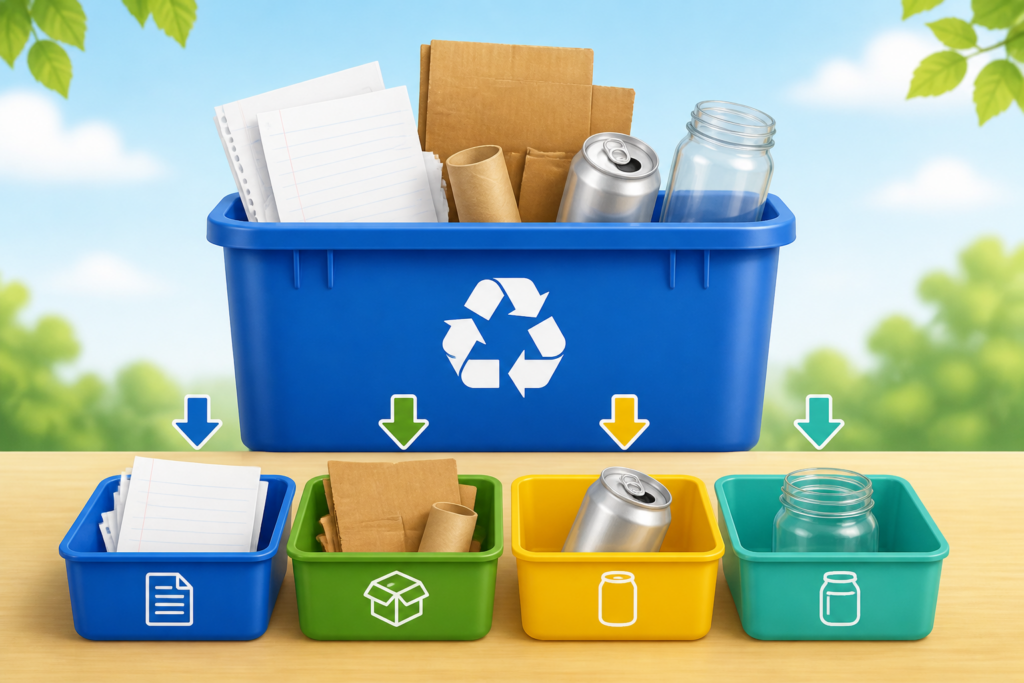
Most recycling systems follow several stages. First, people place accepted items in a recycling bin or take them to a collection center. Trucks carry the material to a facility where workers and machines sort it by type. Magnets can pull out steel, screens can separate objects by size, and optical scanners can identify some kinds of plastic.
After sorting, materials are cleaned and prepared. Paper is mixed with water into a pulp. Glass is crushed into pieces called cullet. Metals are shredded and melted. Plastic is sorted by resin type, chopped into flakes, washed, and formed into pellets. Manufacturers then use these recovered materials to make new containers, boxes, cans, clothing fibers, building products, and other goods.
What materials can be recycled?
Accepted materials vary by town, so always follow local instructions. Many programs collect clean cardboard, paper, steel cans, aluminum cans, and certain plastic bottles or containers. Some communities collect glass jars and bottles, while others use a separate drop-off site. Food, liquids, plastic bags, batteries, electronics, and greasy containers often do not belong in an ordinary curbside bin.
When an unwanted item is placed in the wrong bin, it can contaminate an entire load or damage sorting equipment. Check the label on your local recycling program instead of guessing. “Wish-cycling”—putting something in the bin because you hope it is recyclable—can make the system work less well.
Why does recycling matter?
What is recycling able to do? Recycling can conserve raw materials, reduce the energy needed to make some products, and keep useful materials out of landfills. It can also support jobs in collection, sorting, processing, and manufacturing. The benefits depend on the material, the local system, and whether people prepare items correctly.
Recycling is not the only answer to waste. Reducing consumption, repairing products, sharing items, composting suitable food scraps, and reusing containers can be just as important. A good everyday habit is to buy only what you need, use things for as long as possible, and recycle accepted materials correctly at the end.
Recycling choices at home
What is recycling in everyday life? It is a practical choice made after reducing and reusing are no longer enough. Rinse containers when local rules ask for it, keep paper dry, and never place loose plastic bags, cords, batteries, or chemicals in a curbside bin unless your program specifically accepts them. If an item is not accepted, look for a special drop-off location.
Rules differ because communities use different trucks, sorting equipment, and buyers for recovered materials. A package marked with a recycling symbol is not automatically accepted everywhere. The safest habit is to check your city or hauler’s current list. Learning those rules prevents contamination and helps the material that is collected actually reach a manufacturer.
Recycling works best when households, collection companies, sorting facilities, and manufacturers all do their part. Recovered paper can become new paper products, metals can be melted repeatedly, and glass can be remade into containers. Choosing durable products and using them longer still comes first, but correct recycling is a useful final step.
Related questions
- What can go in the recycling bin?
- Why should we reuse things?
- What is recycling worth doing if local rules differ?
- What happens to a plastic bottle after recycling?
Sources
What happens after something goes into a recycling bin
Putting an item in a recycling bin is only the beginning of the process. Collected material usually goes to a facility where different materials are separated. Equipment and workers may sort paper, cardboard, metals, plastics, and glass into streams that can be cleaned and prepared for processing. What happens next depends on the material and the recycling system used in that community.
Recycling works best when the incoming material is actually accepted and reasonably clean. Food, liquids, plastic bags, batteries, and other items can create problems when they are placed in the wrong collection stream. This is why local rules matter more than a recycling symbol alone. A symbol may identify a material, but it does not guarantee that every local program can recycle it.
Our guide to what can go in a recycling bin explains why accepted items differ from place to place. You can also browse more practical explanations in Everyday Things.
Recycling is most useful as one part of a larger approach: use less when practical, reuse items when possible, and recycle materials that your local system can actually process. That helps reduce contamination and gives recyclable material a better chance of becoming a new product.