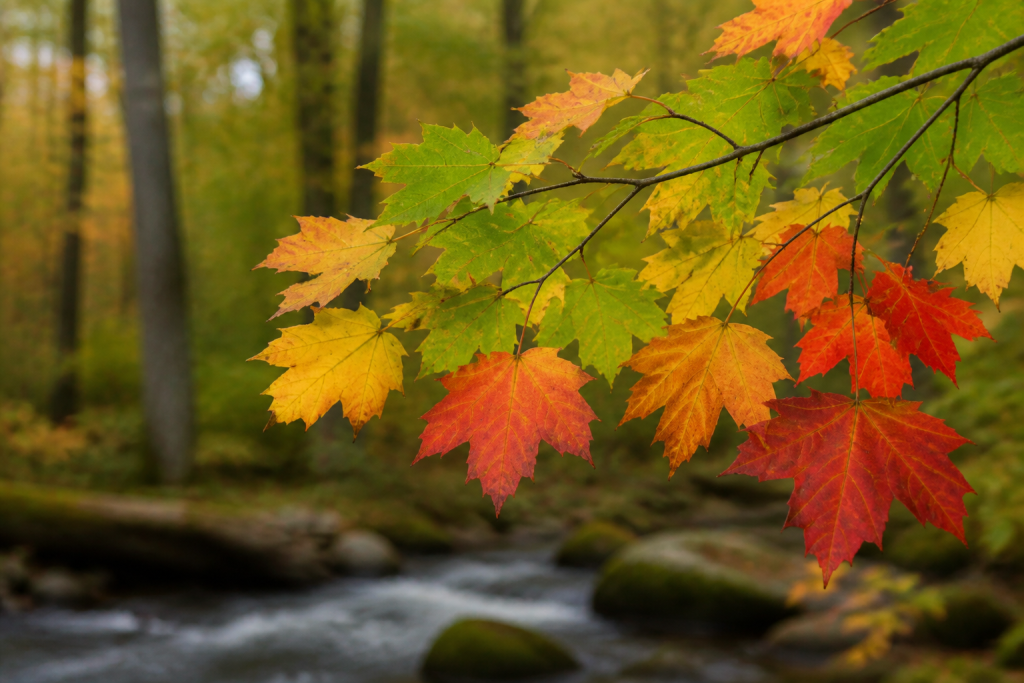
Why do leaves change color? Leaves change color when trees stop making as much chlorophyll, the green pigment that helps turn sunlight into food. As autumn days become shorter and cooler, green fades and other pigments already in the leaf—or revealed as chlorophyll breaks down—become easier to see.
Table of contents
Why are leaves green?
Chlorophyll absorbs much of the red and blue light that reaches a leaf and reflects green light back to our eyes. Inside the leaf, chlorophyll helps power photosynthesis, the process that uses light, water, and carbon dioxide to make sugars. While a tree is actively growing, chlorophyll is continually produced, so the green color hides many other pigments.
Why do leaves change color in autumn?
Shorter days are an important signal for many trees. Cooler temperatures and changes in water availability can also affect the leaf. The tree slows chlorophyll production and begins to recover useful nutrients before the leaf is shed. As the green pigment disappears, the leaf’s underlying colors become visible.
Where do yellow and orange colors come from?
Yellow pigments called carotenoids are present in many leaves throughout the growing season. They help protect the leaf and assist with capturing light, but chlorophyll usually masks them. Orange colors can result from combinations of yellow carotenoids and other pigments. That is why a leaf may look yellow, gold, or orange as its green fades.
Why do some leaves turn red?
Some trees make red or purple pigments called anthocyanins late in the season. Bright days and cool nights can favor anthocyanin production, although the exact pattern depends on the species and weather. Red pigment may help protect the leaf from intense light while the tree moves nutrients out of it. Not every tree makes anthocyanins, so red color is not guaranteed.
Why do leaves look different from year to year?
Temperature, sunlight, rainfall, drought, and the timing of the first frost all influence the display. A warm autumn may delay color change, while stress can cause leaves to brown or drop early. Trees of different species also follow different schedules. Even two trees growing side by side may not peak at the same time.
Why do leaves fall off?
Before a leaf drops, the tree forms a separation layer where the leaf stem meets a twig. The tree reclaims some nutrients, and the connection weakens. Wind or the leaf’s own weight then breaks the remaining links. Losing leaves helps many deciduous trees reduce water loss during winter and avoid damage from ice or cold.
Do evergreen trees change color?
Evergreen needles contain chlorophyll for several years, so these trees do not usually show the same autumn display. Older needles still yellow and fall when they reach the end of their useful life. Evergreen does not mean every needle lasts forever; it means the tree keeps usable foliage through more than one season.
For another look at weather and nature, read what a stratus cloud is and explore our Nature collection.
Related questions
- Why do leaves change color before they fall?
- Why are some autumn leaves red?
- Which trees have the brightest fall colors?
- Why do leaves turn brown?
What is the short answer?
If you are wondering why do leaves change color, the short answer is that chlorophyll fades as the tree prepares for seasonal change. Why do leaves change color differently from one species to another? Each tree has its own mix of pigments, timing, and response to weather.