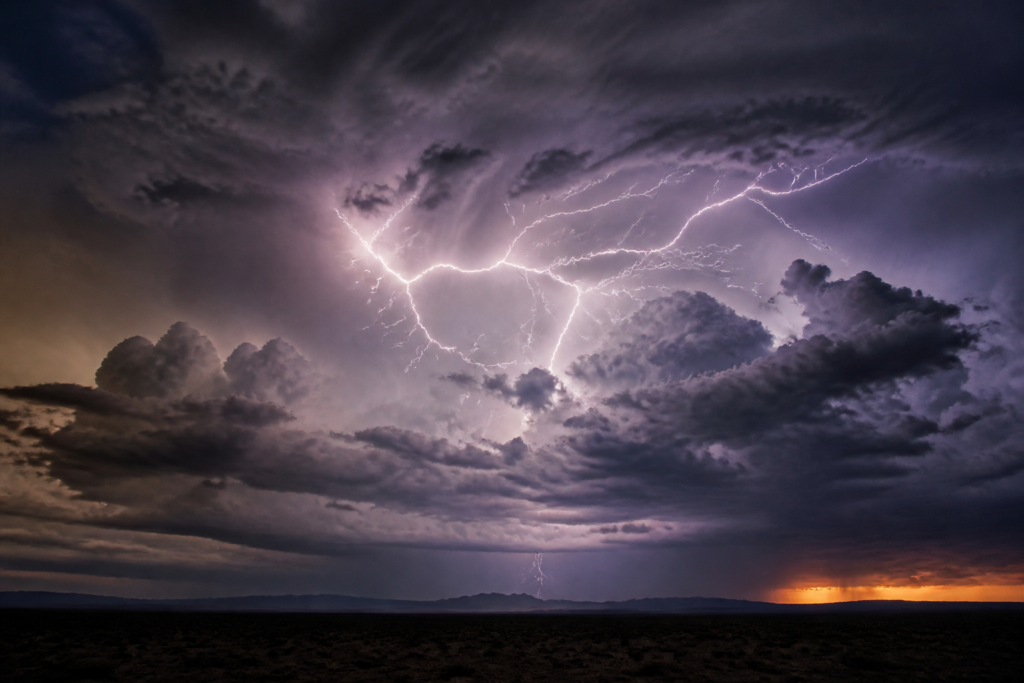
What causes lightning? Lightning is a giant spark of electricity that happens when electrical charges build up inside a thunderstorm and then discharge through the air. The flash may travel within one cloud, between clouds, or from a cloud to the ground.
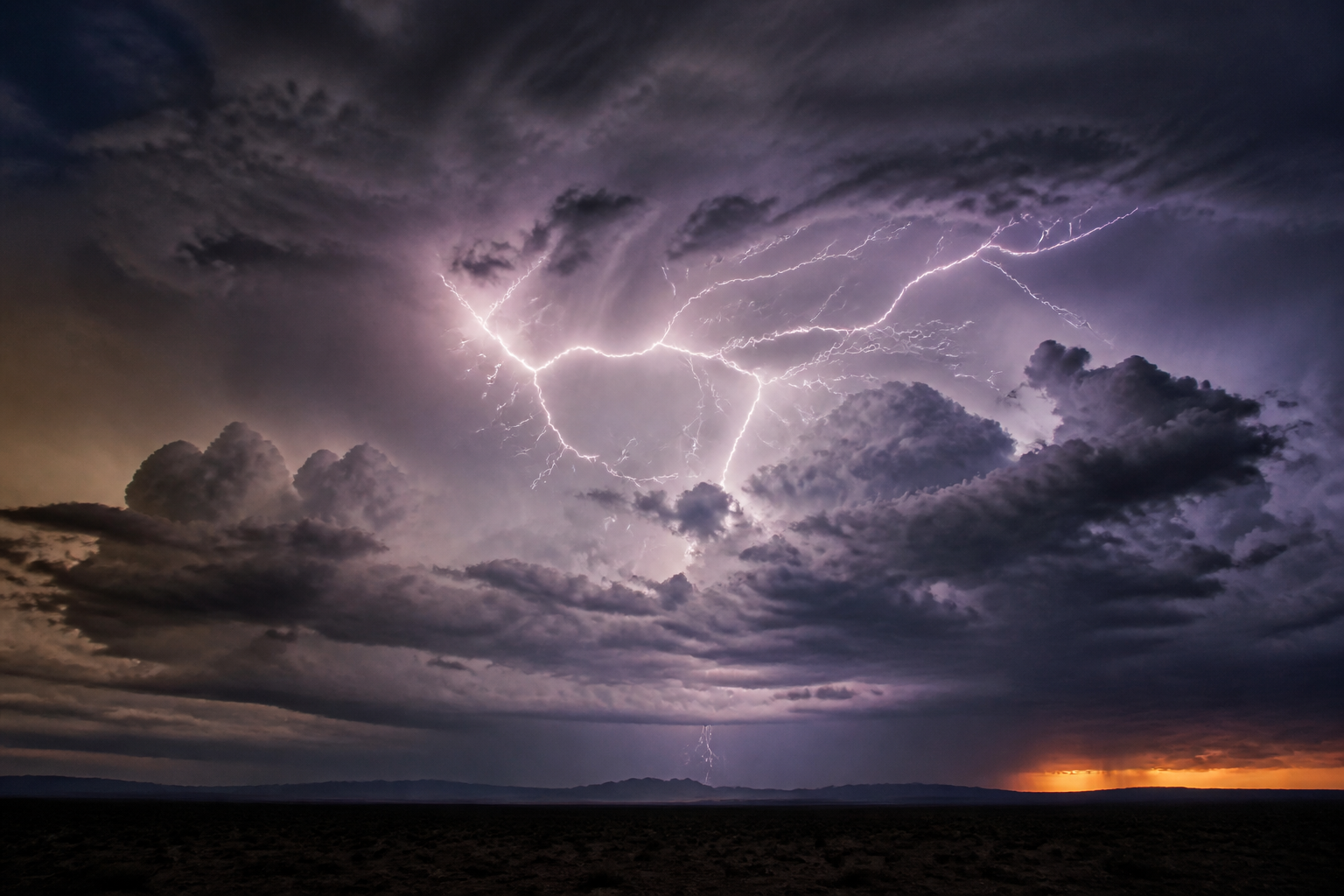
Table of contents
What happens inside a thunderstorm?
A thunderstorm contains strong updrafts and downdrafts. Water droplets, ice crystals, and soft hail move through these currents and collide. Those collisions help separate electrical charge within the cloud. The upper parts often become more positively charged while lower regions become more negatively charged, although the exact pattern is complex.
How do charges separate?
Scientists think collisions between ice particles and graupel, a soft form of hail, transfer electrons. Temperature and motion affect which particle gains or loses electrons. Wind then carries the charged particles to different parts of the storm. As separation grows, the electric field between regions becomes stronger.
How does a lightning flash form?
Air normally acts as an insulator, but a very strong electric field can strip electrons from air molecules and create a conducting channel. A faint stepped leader moves through the air, searching for a path. When it connects with an upward streamer from the ground or another charged region, a powerful return stroke travels along the channel. That rapid movement of charge produces the bright flash.
Why does lightning look jagged?
The channel follows branching paths through areas where the electric field is strongest. Multiple branches may form, but only some carry the brightest return stroke. From the ground, this makes lightning look forked or crooked rather than like a straight line.
What types of lightning are there?
Cloud-to-ground lightning reaches the surface. In-cloud lightning stays inside one cloud and is the most common type. Cloud-to-cloud lightning connects separate clouds, while positive lightning can travel from the upper part of a storm to the ground and may reach farther than ordinary flashes.
Can lightning happen without rain?
Yes. A storm can produce lightning before rain reaches the ground, and dry thunderstorms can create lightning with little surface rainfall. Lightning may also occur far from the heaviest rain area, so a clear-looking sky is not proof that conditions are safe.
How is lightning connected to thunder?
The lightning channel heats surrounding air extremely quickly. That air expands suddenly and creates a pressure wave that we hear as thunder. Because light travels much faster than sound, the flash appears before the thunderclap. You can estimate distance by counting seconds between them, but seek shelter whenever thunder is audible.
Is lightning dangerous?
Yes. Lightning can injure or kill people, start fires, and damage electrical equipment. During a storm, go inside a substantial building or a hard-topped vehicle. Avoid isolated trees, open fields, water, and metal objects. Wait until at least 30 minutes after the last thunder before returning outdoors.
Short answer
What causes lightning? Charge separation inside a storm creates a powerful electric field. When the field becomes strong enough to overcome air’s insulating effect, electricity discharges through a branching channel as a bright lightning flash.
Why does lightning branch?
What causes lightning to branch is the changing strength of the electric field in the air. The developing channel follows paths where charged particles can move most easily, then splits when several routes are possible. That branching pattern is why no two flashes look exactly alike.
What causes lightning to strike the ground?
A tall object, wet surface, or elevated point can help an upward streamer meet the descending channel. This does not mean a person can safely predict where a strike will land. Lightning can reach exposed locations far from the rain core, so shelter is always the safest choice when thunder is present.
Lightning is part of the same weather system that produces thunder. You can also read what causes thunder and learn what clouds are made of to see how storm conditions connect.