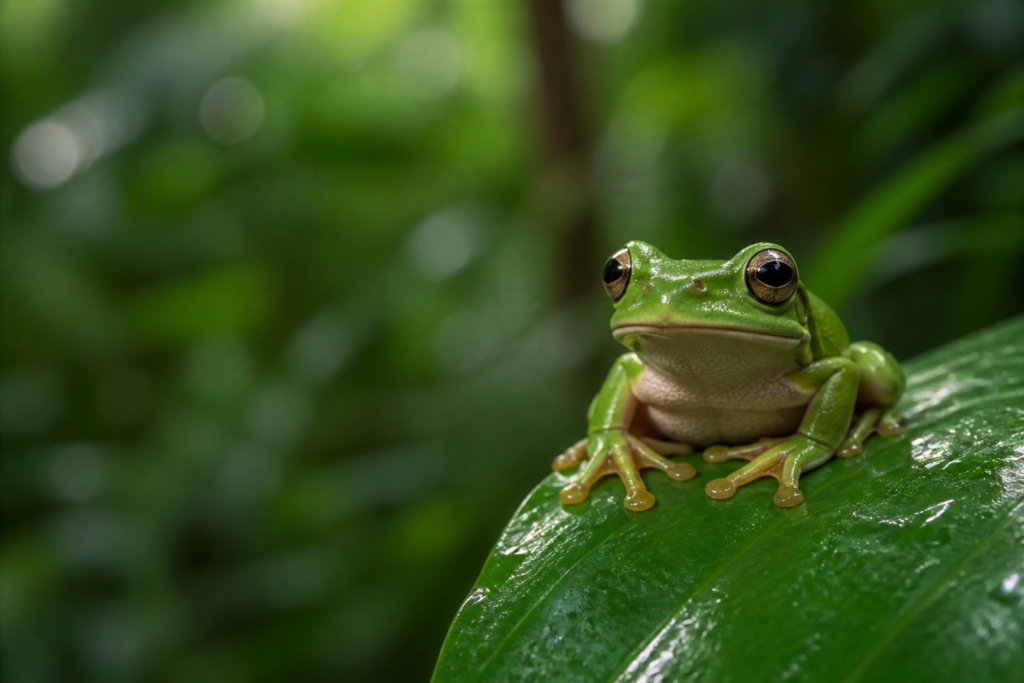
How do frogs grow? Frogs grow through metamorphosis, a series of body changes that transforms a swimming tadpole into an air-breathing young frog. The exact timing varies by species, temperature, food, and water conditions.
Eggs and tadpoles
Most frogs begin as eggs laid in water. When an egg hatches, the young tadpole has a rounded body, a tail for swimming, and gills for breathing underwater. Tadpoles often eat algae, soft plants, and tiny organisms. They grow by feeding, resting, and gradually developing stronger muscles and a more recognizable body shape.
Metamorphosis
During metamorphosis, a tadpole first develops back legs and then front legs. Its lungs form so it can breathe air. Its mouth and digestive system change from a plant-focused diet toward the animal prey eaten by many adult frogs. The tail is absorbed and used as energy. Skin, eyes, and the skeleton also change as the animal prepares to live on land.
Adult frogs
A young frog may leave the water once its legs and lungs work well. Adult frogs continue to grow, but they do not keep changing shape in the dramatic way tadpoles do. They eat insects and other small animals, find shelter, avoid predators, and eventually become able to reproduce. Some species mature in a few months, while others take several years.
What affects frog growth?
Warmth, clean water, food, crowding, disease, and predators can all affect growth. A pond with plenty of shelter and food may support faster development than a polluted or temporary pool. Not every tadpole survives to adulthood. Drought, introduced fish, habitat loss, and pollution can reduce survival.
What is the froglet stage?
A froglet is the in-between stage after a tadpole has grown legs but before it looks completely like an adult frog. It may still have a short tail, and its body is finishing the switch from an aquatic larva to a young frog that can breathe air and move on land. Froglets are especially vulnerable because they are small, still developing, and often moving between water and shoreline shelter.
Why does a tadpole lose its tail?
The tail does not simply fall off. As metamorphosis continues, the tadpole absorbs the tail tissue and reuses those stored materials while the rest of the body changes. At the same time, the legs strengthen, the lungs become more important, and the mouth and digestive system shift toward the adult form. By the time the tail is gone, the young frog is much better suited for life outside the water.
Why is growth important?
Frog metamorphosis connects aquatic and land ecosystems. Tadpoles can influence algae and plant growth, while adult frogs eat insects and become food for birds, snakes, fish, and mammals. For related explanations, read what a frog is and why frogs need water.
How do frogs grow over time?
To understand how do frogs grow, compare the tadpole stage with the adult stage. Young frogs need food, shelter, and clean water while their bodies change. Growth can be quick in warm conditions, but cold weather slows development.
When people ask how do frogs grow, the important idea is metamorphosis. Legs, lungs, skin, mouth, and the tail all change in a coordinated sequence. A frog’s growth is complete when it can live and breathe as an adult.
These changes help frogs move between water and land. For more background, read what a frog is.
Growth is not identical for every frog. Some species spend most of their lives in water, while others quickly become land-dwelling. Observing tadpoles without disturbing them is the safest way to learn from a local pond.
Keep wondering
What do frog eggs look like, what do tadpoles eat, and why do frogs need water?