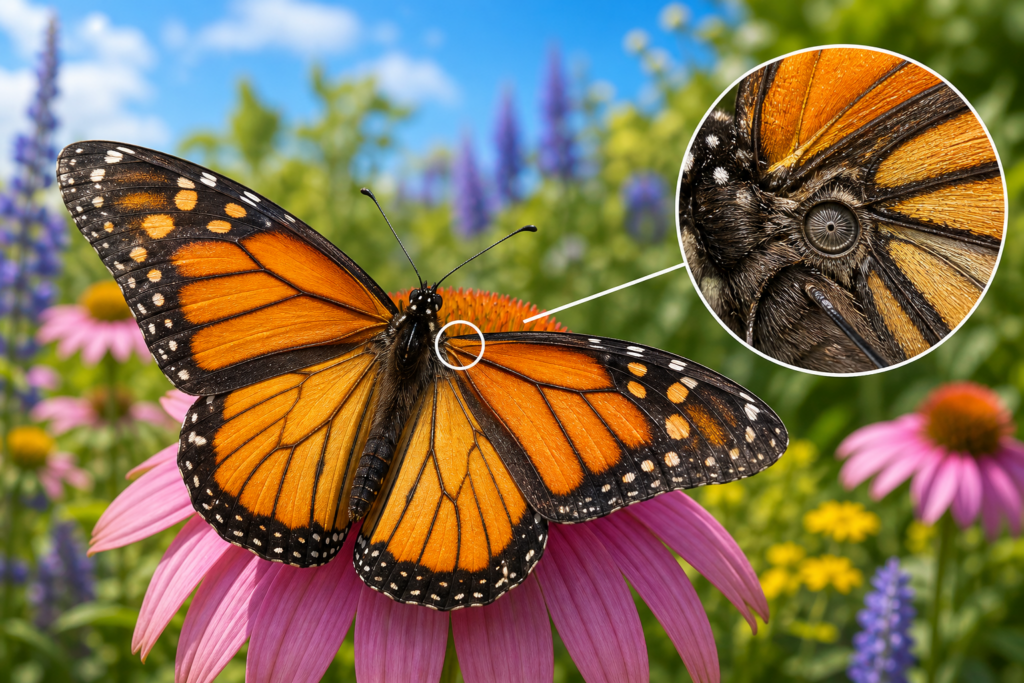
What is a butterfly? A butterfly is an insect with six legs, two pairs of wings, antennae, and a body divided into a head, thorax, and abdomen. Butterflies begin life as eggs, hatch as caterpillars, form a chrysalis, and emerge as winged adults.
What is a butterfly’s body like?
A butterfly’s wings are covered with tiny scales that reflect and absorb light. The wings create patterns used for camouflage, warning, or attracting a mate. A butterfly uses its long proboscis like a straw to drink nectar and other liquids. Its antennae help it sense smells and direction.
What makes a butterfly an insect?
Butterflies are insects because they have the basic insect body plan: three main body regions, six legs, one pair of antennae, and two pairs of wings. The head carries the eyes, antennae, and mouthparts. The thorax is the middle section where the legs and wings attach. The abdomen contains many of the organs used for digestion and reproduction. Looking for these features is a simple way to tell an insect from an arachnid such as a spider, which has eight legs and no antennae.
What are butterfly wings and antennae used for?
A butterfly wing is covered with many tiny scales. Those scales help create the colors and patterns people see and can play a role in camouflage, warning, or attracting mates. The antennae are sensory organs that help butterflies detect chemical signals and navigate their surroundings. Butterflies usually have slender antennae that end in a small club, which is one common clue that helps distinguish them from many moths.
How does a butterfly grow?
Butterflies undergo complete metamorphosis. A female lays eggs on a plant that will provide food for the caterpillar. The caterpillar eats, grows, and sheds its skin several times. It then forms a chrysalis. Inside, its body reorganizes before an adult butterfly emerges, dries its wings, and begins flying.
What do butterflies eat?
Adult butterflies commonly drink nectar from flowers, but some also use tree sap, rotting fruit, minerals in wet soil, or animal droppings. Caterpillars usually eat leaves from particular host plants. This close relationship means that protecting native plants can help local butterfly species.
How do butterflies protect themselves?
Butterflies may blend into leaves, resemble eyes or other animals, taste unpleasant, or fly away quickly. Some species use bright colors to warn predators, while others hide their wings when resting. Their defenses vary by species and life stage.
Why are butterflies important?
Butterflies pollinate flowers and provide food for birds, bats, spiders, and other animals. They also help people notice changes in habitat, weather, and plant health. For related explanations, read how butterflies grow and why butterflies are important.
How do butterflies use their wings?
Butterfly wings help with flight, warmth, communication, and escape. A butterfly can bask in sunlight to raise its body temperature, then search for flowers or a place to lay eggs. Wing patterns may help a butterfly hide when its wings are closed and look startling when they open.
What is a butterfly in an ecosystem? It is both a pollinator and a food source. Watching butterflies quietly can reveal which plants are flowering and which habitats remain healthy. People can help by planting native flowers and avoiding unnecessary pesticides.
What is a butterfly compared with a moth? Both are insects with scaled wings, but butterflies usually rest with their wings upright and are active during the day. Moths are often active at night, although there are exceptions. What is a butterfly’s most important feature? Its life cycle connects plants, flowers, caterpillars, and many other animals in one small ecosystem.
When asking what is a butterfly, it helps to remember that no single color or size defines every species. A local field guide can identify the adults and caterpillars found in a particular region.
Keep wondering
What do butterflies eat, can butterflies hear, and how do butterflies find flowers?