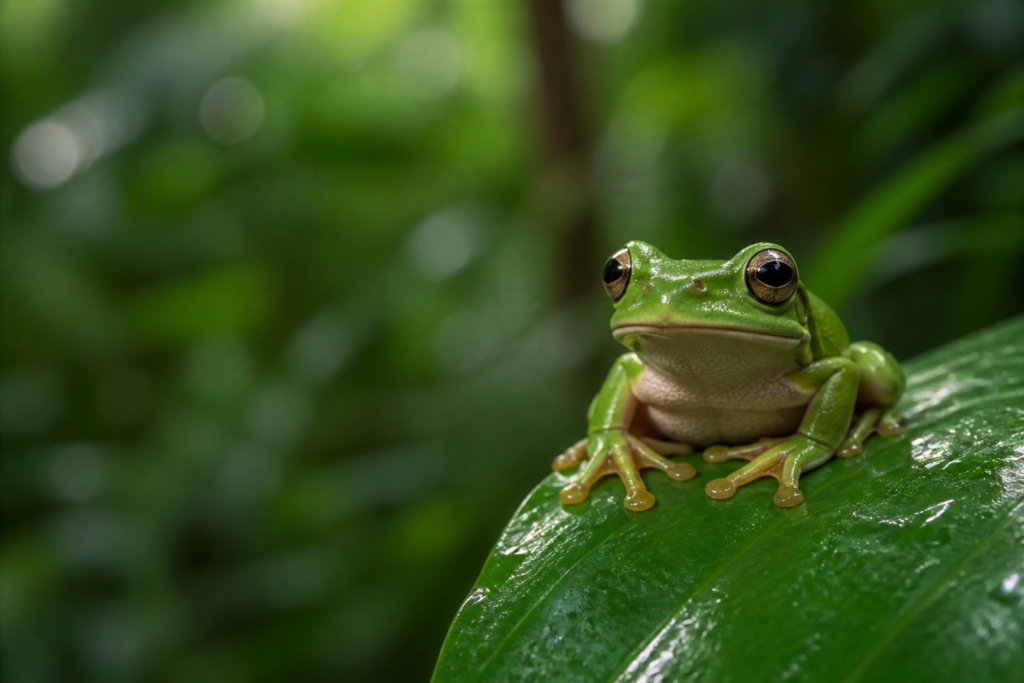
Where do frogs live? Frogs live in many habitats, including ponds, wetlands, streams, forests, grasslands, deserts, and gardens. Most need moisture, shelter, food, and a safe place to reproduce. The best habitat depends on the frog species.
Where do frogs live in wetlands?
Many frogs live near ponds, marshes, swamps, slow streams, and temporary pools. Wetlands provide water for eggs and tadpoles, insects for food, and plants or mud for shelter. Some frogs spend most of their adult lives in the water, while others hide nearby and visit the water mainly to breed.
Where do frogs live on land?
Adult frogs may live under leaves, logs, rocks, or damp soil in forests and grasslands. They often choose shaded places that slow water loss through their skin. A garden can support frogs when it has native plants, insects, leaf litter, and a clean shallow water source.
Where do tree frogs live?
Tree frogs use branches, leaves, bark, and vegetation above the ground. Their toe pads help them grip smooth surfaces. Rain-filled hollows and leaves can provide temporary water. Even frogs that climb trees need nearby moisture and suitable breeding habitat.
Can frogs live in dry places?
Some species survive in deserts or dry regions by sheltering underground, staying inactive during drought, or breeding quickly after seasonal rain. These frogs are adapted to local conditions, but they still need enough moisture for their skin and reproduction.
Do frogs stay in the same habitat all year?
Not always. A frog may use one place for breeding, another for feeding, and a different shelter during cold or dry weather. Some species gather at ponds only during the breeding season, then spend much of the rest of the year in nearby woods, grass, leaf litter, or burrows. Seasonal movement is one reason a healthy frog habitat often includes more than the water itself.
Why does the land around a pond matter?
The shoreline and surrounding land provide cover, insects, shade, and routes between feeding and breeding areas. Logs, leaves, native plants, damp soil, and shallow edges can all give frogs places to hide. If a pond is clean but the nearby land is paved, heavily mowed, or cut off by roads, frogs may still have trouble surviving. Protecting connected habitat gives them more ways to move safely as conditions change.
How can people protect frog habitats?
Keep ponds and streams clean, protect wetland plants, reduce pesticide use, and avoid removing logs or leaf litter unnecessarily. Never release pet frogs into the wild. For related explanations, read what a frog is and how frogs grow.
How do frogs choose a home?
A frog chooses a place that matches its body and life cycle. It may need quiet water for eggs, plants for cover, loose soil for hiding, and enough insects for food. Temperature and rainfall also shape where a species can survive. A pond that suits one frog may be unsuitable for another.
Why habitat connections matter
Frogs often move between breeding ponds and feeding or sheltering areas. Roads, fences, drainage, and development can break those connections. Protecting a wider area around a wetland gives frogs safer routes and helps young animals disperse. Healthy habitat also supports birds, insects, fish, and plants.
When people ask where do frogs live, the most accurate answer is that frogs live wherever their species can find moisture, food, shelter, and breeding conditions. For more context, read why frogs need water.
Where do frogs live in winter? Many slow down in cold weather and shelter under soil, leaves, rocks, or underwater mud. Where do frogs live during dry seasons? Some hide underground or wait for rain. Where do frogs live safely? They need clean, connected habitat with places to hide and breed.
Keep wondering
What do frogs eat, why do frogs need water, and how do frogs protect themselves?