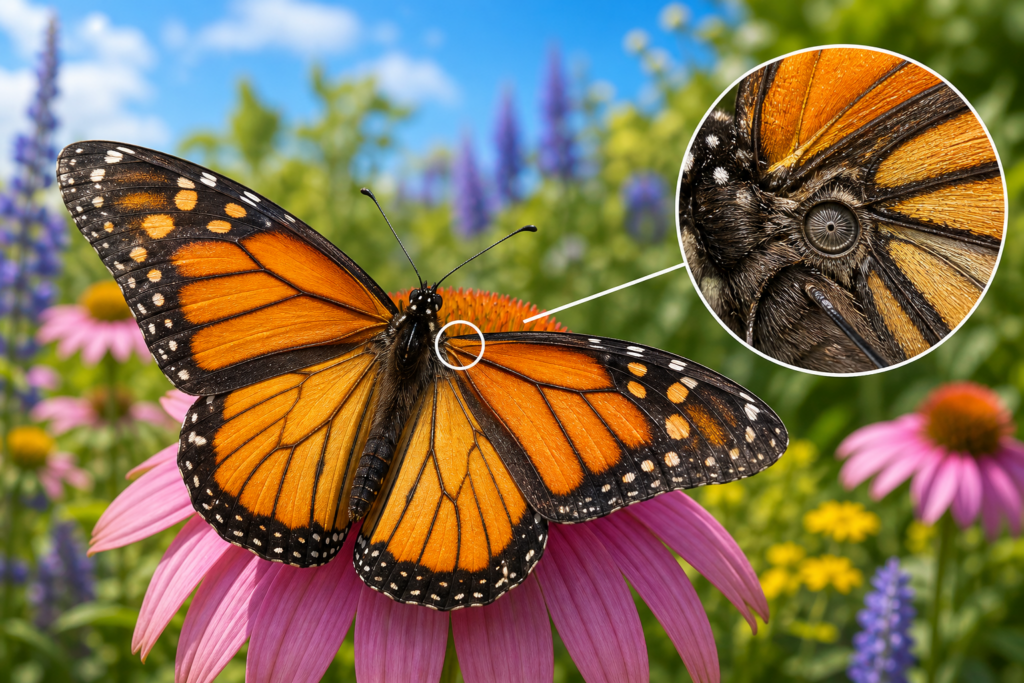
How do butterflies grow? Butterflies grow through four stages: egg, caterpillar, chrysalis, and adult. This complete change is called metamorphosis. Each stage has a different job, and the insect looks very different as it develops.
How do butterflies grow from eggs?
A female butterfly lays tiny eggs on, or close to, a plant that the young caterpillar can eat. The plant choice matters because a newly hatched caterpillar may not travel far to find food. Eggs can be round, oval, or ribbed, and their color varies by species. Inside each egg, a developing caterpillar uses stored nutrients until it is ready to hatch.
What happens when a caterpillar hatches?
The caterpillar, also called a larva, usually begins by eating its eggshell. It then spends most of its time eating leaves and growing. A caterpillar’s outer skin cannot stretch forever, so it sheds that skin several times. Each step between molts is called an instar. Caterpillars may look plain or brightly patterned, but their main purpose is to collect energy for the next stage.
Why are host plants important for caterpillars?
Many caterpillars can eat only a limited range of plants. That means the plant where an egg is laid can determine whether the young caterpillar has the food it needs. A butterfly garden works best when it includes both nectar flowers for adults and host plants for growing caterpillars.
Why does a caterpillar form a chrysalis?
When the caterpillar has grown enough, it stops eating and finds a safe place. It attaches itself with silk and forms a chrysalis, also called a pupa. The chrysalis is not a simple sleeping shell. Inside, the caterpillar’s body is reorganized as adult structures develop, including wings, long legs, antennae, and a proboscis. The timing depends on species, temperature, and season.
How does the adult butterfly emerge?
After the change is complete, an adult butterfly pushes out of the chrysalis. Its wings are soft and folded at first. The butterfly pumps fluid through the wing veins, then rests while the wings expand and harden. Once the wings are ready, it can fly, find food, avoid predators, and reproduce. Adult butterflies may live for days, weeks, or several months depending on the species.
Do all butterflies grow at the same speed?
No. Warm weather often speeds development, while cold weather slows it. Food quality, daylight, predators, and the species itself also matter. Some butterflies spend winter as eggs, caterpillars, chrysalises, or adults. That flexibility helps them survive changing seasons.
How can people help butterflies grow?
Provide native host plants for caterpillars and nectar flowers for adults. Avoid unnecessary pesticides, leave some leaves and stems for shelter, and protect chrysalises when you find them. A garden that supports every stage is more useful than one with flowers alone.
For related explanations, read what a butterfly is, what butterflies eat, and why butterflies are important.
Keep wondering
A caterpillar’s colors can help with camouflage or warning signals, while adult butterflies rely on very different senses and behaviors. Those contrasts make the caterpillar stage easier to understand in the context of the whole life cycle.
Understanding how do butterflies grow makes the life cycle easier to follow. How do butterflies grow in cold weather? Development may slow until warmer conditions return, but the same four stages remain.
What changes inside the chrysalis?
Inside the chrysalis, the caterpillar does not simply become a smaller version of itself. Groups of developing cells build adult features while older larval tissues are broken down and reused. Wings, compound eyes, antennae, legs, and the feeding tube all take shape during this protected stage. When the process is finished, the adult butterfly is ready to expand its wings and begin a new cycle. The four stages work together: eggs begin the story, caterpillars gather energy, chrysalises manage the transformation, and adults produce the next generation.