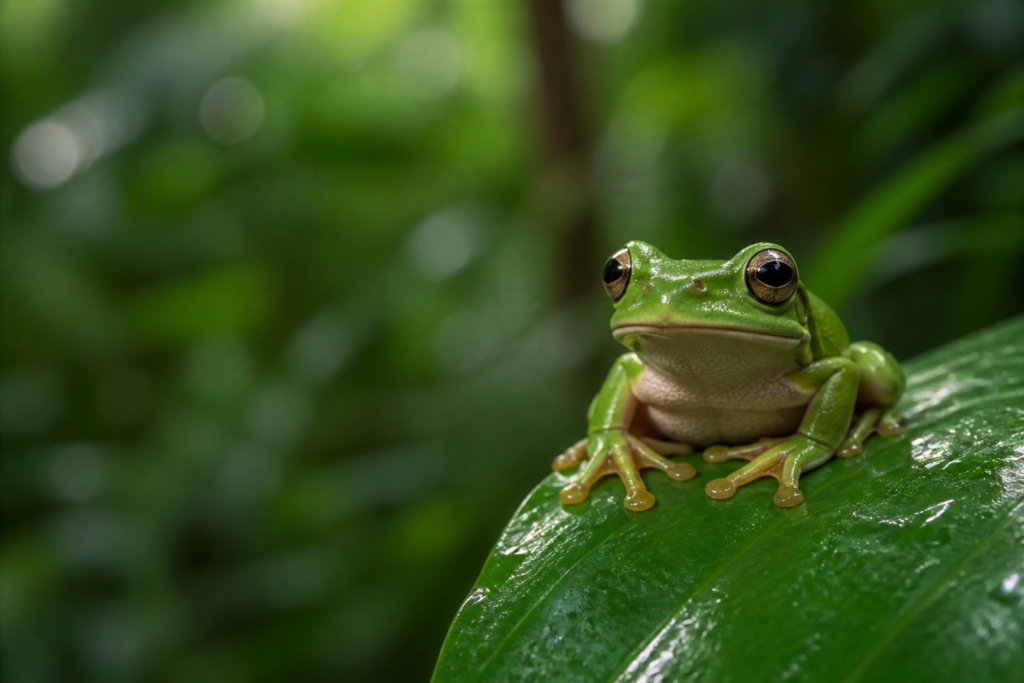
What do frogs eat? Adult frogs usually eat insects and other small animals. This guide explains their food at each life stage and how their diet changes with habitat.
Short answer
It depends on the frog and on its life stage. Many tadpoles eat algae, plants, and bits of decaying material in water. Many adult frogs eat insects and other small animals without backbones, such as spiders, beetles, snails, or crayfish.
A menu that changes
A very large frog can eat larger prey than a tiny treefrog can. That is why it is more accurate to say that frogs have different menus, rather than saying that every frog eats the same food.
How often do frogs eat?
Frogs do not follow one universal meal schedule. A healthy adult may eat when prey is available, and activity often increases at night or during warm, damp weather. Cold temperatures can slow a frog’s metabolism. Tadpoles may graze for long periods because they are growing quickly. The amount a frog eats also depends on its age, body size, and energy needs.
What should people remember?
The safest general answer is that frogs are predators as adults and usually eat small live prey. Their diets are part of a balanced ecosystem, not a reason to remove every insect. If you are identifying a frog, observe it quietly and avoid feeding wild animals. A local wildlife agency or university extension is a better source for species-specific care than an unverified social-media post.
Seasonal changes matter too. After rain, frogs may find more insects around plants and wet ground. In dry weather they conserve energy and wait for better conditions. This is one reason a frog’s diet can look different from one pond to another. The best explanation always considers the species, its age, and the habitat where it lives.
Keep wondering
How does a frog catch a fast-moving insect?
What do frogs eat?
What do frogs eat? Adult frogs usually eat insects and other small animals that they can swallow. Common foods include flies, moths, crickets, beetles, grasshoppers, worms, spiders, and other invertebrates. Some large frogs may eat small fish, tadpoles, or young amphibians. A frog’s exact diet depends on its size, species, habitat, and what prey is available.
What do tadpoles eat?
Tadpoles often eat algae, soft plants, and tiny organisms growing on rocks and plants. As they change into young frogs, their mouths, digestive systems, and food preferences change. A newly transformed frog begins hunting small insects and other prey.
How do frogs catch food?
Many frogs sit still and wait for prey to move. When an insect comes close, the frog may thrust out a sticky tongue, catch the prey, and pull it back into its mouth in a fraction of a second. Frogs do not chew like people. They swallow food whole, often using their eyes to help push it down.
Do frogs need live food?
Wild frogs normally eat live prey because movement triggers their hunting response. Pet frogs have specialized care requirements, and their diet should follow guidance from a qualified exotic-animal veterinarian rather than a random list online. Never feed wild frogs unsafe food or release captive animals into local habitats.
Why is a frog’s diet important?
Frogs help control insect populations and connect aquatic and land food webs. If a wetland loses insects or becomes polluted, frogs may struggle to find food. Protecting clean ponds, streams, and vegetation helps preserve the prey frogs need. For related explanations, read what a frog is and why frogs need water.
Keep wondering
What do frogs eat in winter, how do frogs find food, and what do baby frogs eat?
Sources
- National Park Service: Amphibians
- National Park Service: American Bullfrogs Fast Facts
- Washington Department of Fish & Wildlife: Frogs