Short answer
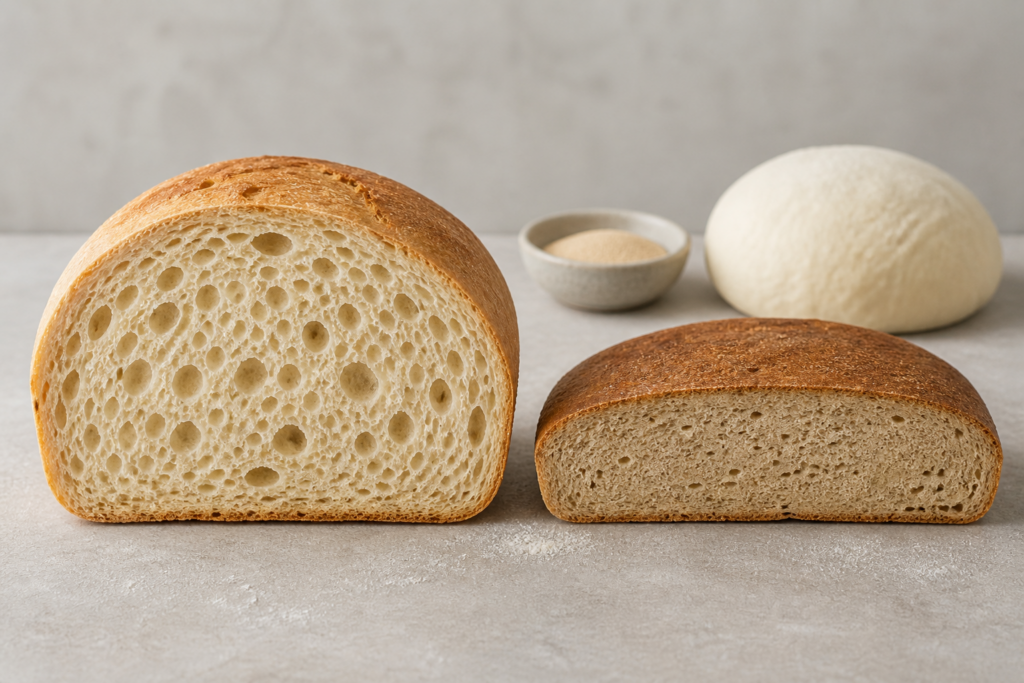
Why does my bread not rise? Usually, the yeast is inactive, the dough is too cold, it has not had enough time, or the dough cannot hold the gas the yeast produces. Start by checking the yeast, the liquid temperature, the room temperature, the recipe measurements, and whether the dough has had enough time to expand.
Table of contents
How bread is supposed to rise
Yeast is a living fungus. When it becomes active in bread dough, it feeds on available sugars and releases carbon dioxide. In wheat bread, a stretchy gluten network traps that gas in thousands of small bubbles. Those bubbles expand and make the dough grow.
Kneading or folding helps organize and strengthen that gluten network. During baking, the trapped gas expands further, the yeast eventually stops working, and the loaf’s structure sets. If the yeast produces too little gas—or the dough cannot hold it—the loaf stays small and dense.
Six common reasons your bread is not rising
1. The yeast is old or inactive
Expired or poorly stored yeast may produce too little carbon dioxide. Check the date on the package and follow the package or recipe directions for testing the yeast when that step is required. If a yeast mixture that should become active shows no sign of activity, replacing the yeast is often the simplest solution.
2. The liquid was too hot
Very hot liquid can kill yeast before the dough begins to rise. Use the temperature recommended by the recipe or yeast package rather than guessing. Warm and hot are not interchangeable when you are working with yeast.
3. The dough is too cold
Yeast works more slowly in cool conditions. A cold kitchen, cold ingredients, or a cold bowl can lengthen the rising time. Move the covered dough to a comfortably warm, draft-free place, but do not expose it to high heat.
4. The dough needs more time
Rising times in recipes are estimates. The dough’s temperature, ingredients, yeast type, and room conditions can make proofing faster or slower. Watch how the dough changes instead of relying only on the clock. A slow dough may still rise normally if the yeast is active.
5. There was a measuring mistake
Too much salt can slow yeast activity. Too much flour can make the dough stiff, and forgetting the yeast prevents a yeast-leavened dough from rising at all. Recheck the recipe and think through each ingredient before assuming that time will solve the problem.
6. The dough cannot hold enough gas
Gluten helps wheat dough trap carbon dioxide. Dough that has not developed enough structure may release gas instead of holding it. Very dry dough, damaged dough, or a recipe made with low-gluten ingredients can also behave differently from a standard wheat loaf. Follow the mixing and kneading directions for the specific recipe you are using.
How to diagnose dough that will not rise
If you are asking why does my bread not rise?, work through these checks in order. They separate a slow rise from a problem that more waiting will not solve.
- Check the yeast: confirm that it was added, that it is within date, and that it was stored as directed.
- Check the temperature: consider whether the liquid was too hot or the dough is sitting somewhere too cold.
- Check the time: if the dough is cool but the yeast is active, allow more time.
- Check the measurements: look for excess salt or flour and other ingredient mistakes.
- Check the dough: compare its texture and development with the recipe’s description.
Can you still bake dough that did not rise?
You can bake it, but the loaf will probably be dense. If the yeast is active and the dough is simply cold, giving it more time in a warmer place may help. If the yeast was killed, expired, or omitted, waiting longer will not fix the original dough.
A failed loaf can still teach you something. Record the yeast used, ingredient temperatures, room conditions, rising time, and any substitutions. That makes it much easier to identify the cause and improve the next loaf.
Two quick follow-up questions
Why does my bread not rise even when the yeast is new?
New yeast can still be damaged by liquid that is too hot, slowed by a cold dough, or affected by a measuring mistake. Check temperature, time, salt, flour, and dough development before blaming the yeast alone.
Why does my bread not rise in a cold kitchen?
Yeast activity slows as the dough becomes colder. If the yeast is active, a cold dough often needs more time in a comfortably warm, draft-free place. Follow the recipe’s visual cues as well as its estimated rising time.
The main point
The answer to why does my bread not rise? usually comes down to gas production or gas retention.
Bread rises only when gas is produced and the dough can hold it. Check yeast activity first, then temperature, time, measurements, and dough structure. That sequence solves the most common bread-rising problems without relying on guesswork.
Related question
- Why does bread rise?
Sources
- Exploratorium: Bread Science 101
- Montana State University Extension: A Troubleshooter’s Guide to Imperfect Loaves
- Iowa State University Extension: Yeast Bread Baking
Related questions: If you are troubleshooting everyday kitchen science, see why popcorn pops and why bananas turn brown.