How does electricity get to your home? It travels through a connected system called the electric grid. Power is generated, moved over high-voltage transmission lines, adjusted at substations, carried through local distribution lines, reduced by a neighborhood transformer, and delivered through a service line to your electrical panel.
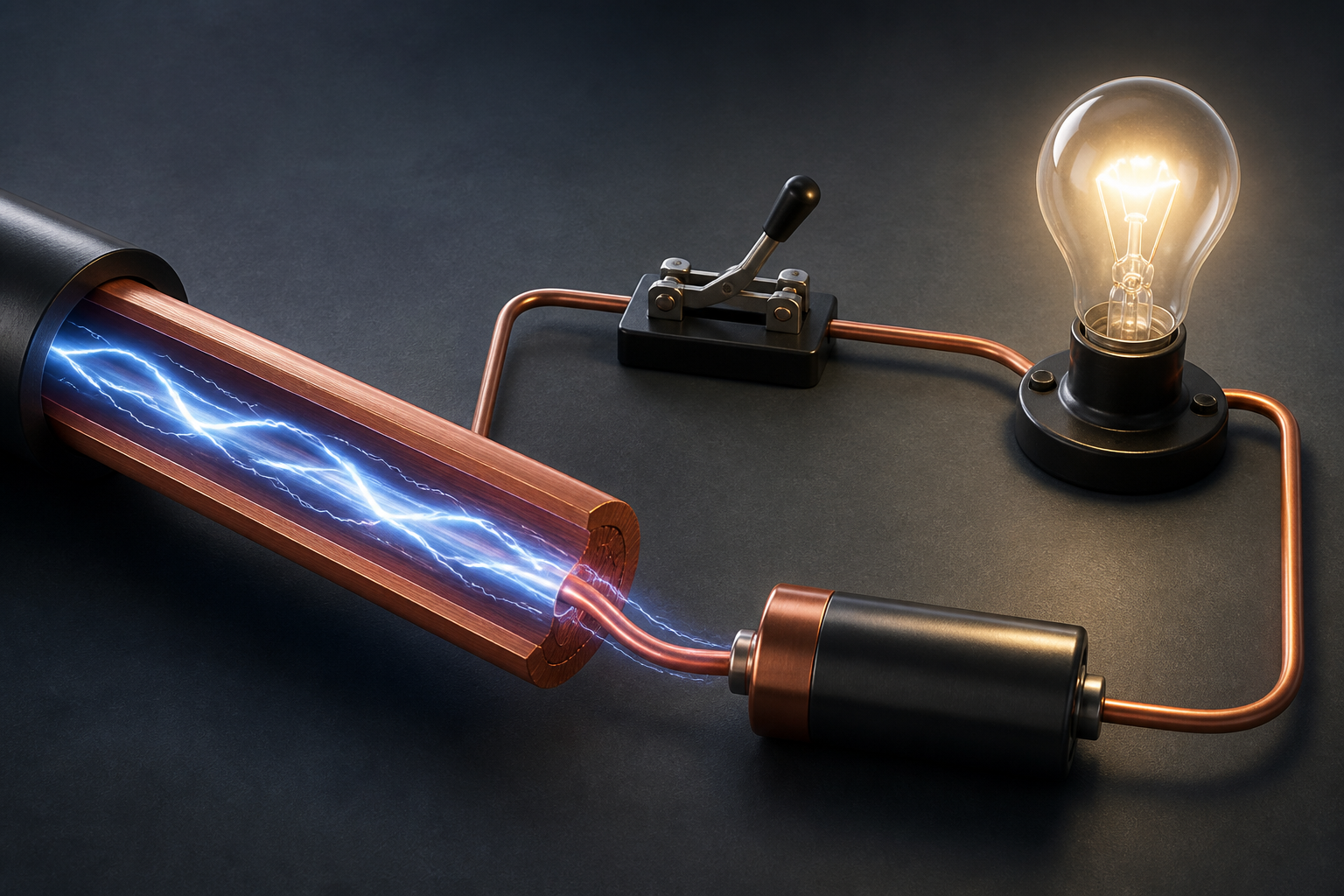
Table of contents
1. Electricity is generated
The journey begins at a power plant or another generating site. Turbines and generators may use moving water, wind, sunlight, nuclear energy, natural gas, coal, or other sources. Solar panels make electricity directly, while many other plants spin a generator to produce it.
2. High-voltage lines move power
After generation, a transformer raises the voltage. High voltage allows electricity to travel long distances with less energy lost as heat in the wires. Tall transmission towers carry this power across regions toward communities that need it.
3. Substations adjust the voltage
Near a town or city, a substation uses transformers, switches, and protective equipment to lower the voltage for the next stage. Substations can also direct power between different lines and disconnect equipment when a fault occurs. Read what a substation does for more detail.
4. Local distribution lines carry electricity
Lower-voltage distribution lines run along streets and through neighborhoods. Some lines are overhead on poles; others are buried underground. The network branches repeatedly so each group of homes and businesses can receive power.
5. A transformer serves your home
A pole-mounted or ground-level transformer reduces the voltage again. It is the familiar gray can on a utility pole or a box near a sidewalk. The transformer is sized to serve several nearby homes and prepares electricity for ordinary household circuits.
6. The service line reaches the electrical panel
A service line connects the neighborhood transformer to the meter at your property. The meter records how much electricity the home uses. From the meter, conductors enter the main electrical panel, where a main breaker and branch breakers protect the wiring.
7. Circuits deliver power to outlets
Branch circuits leave the panel and run to lights, outlets, appliances, and other equipment. When you switch on a lamp, the circuit is completed and electrical energy moves through the wires. Safety devices can interrupt the circuit if current becomes dangerously high.
Why are transformers necessary?
The grid uses different voltage levels because each stage has a different job. High voltage is efficient for long-distance transmission, while lower voltage is appropriate for neighborhoods and homes. Transformers change voltage without changing the frequency of alternating current supplied by the grid.
What happens during a power outage?
An outage can occur when a line is damaged, equipment fails, severe weather strikes, or crews perform planned maintenance. Protective devices disconnect the affected section to reduce danger. Utilities then locate the problem, repair it, and restore power in stages.
Short answer
How does electricity get to your home? It moves from a generator through transmission lines, substations, distribution lines, a local transformer, a meter, and your electrical panel. Each step changes or protects the power so it can be delivered safely.
How the grid stays reliable
Electric utilities balance supply and demand every moment. Control centers monitor lines and equipment, while automatic switches and protective relays respond when a problem appears. Some communities also use batteries, rooftop solar, or other local resources. These additions can support the grid, but the basic path remains the same: generation, transmission, substations, distribution, and the wiring at your home.
Can electricity travel instantly?
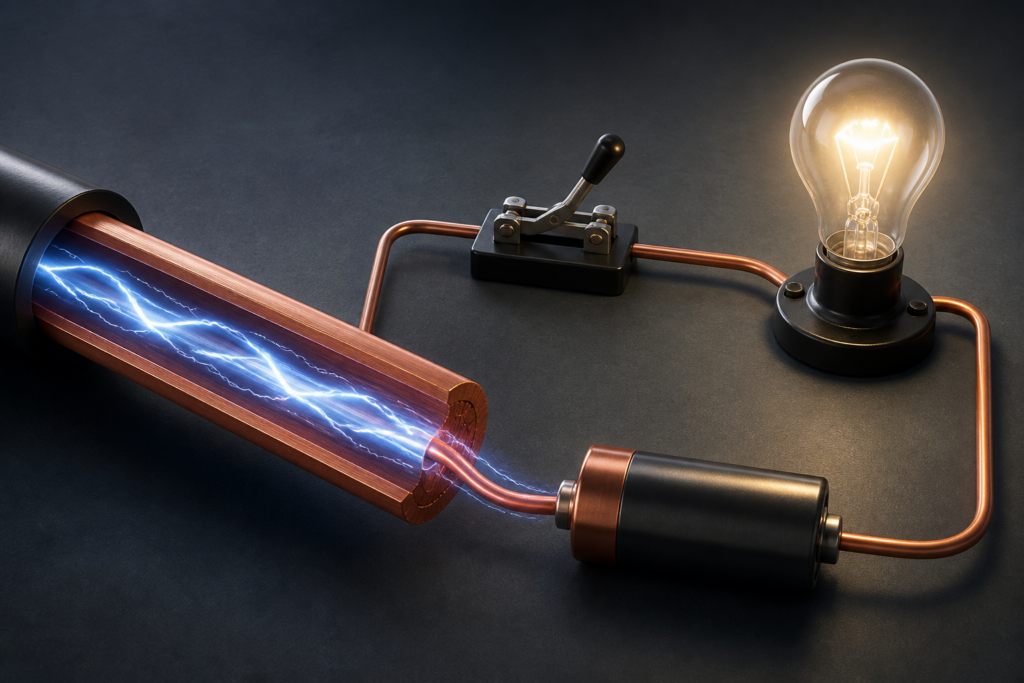
Changes in an electrical circuit travel very quickly through the grid, but the individual electrons in a wire move much more slowly. The important point is that the electric field transfers energy through the connected circuit. This is why turning on a light can produce an immediate result even though the power may have been generated many miles away.
How does electricity get to your home safely?
Understanding how does electricity get to your home makes the grid easier to picture. The utility controls the path from the generating station to the neighborhood transformer, while the meter and breakers help protect the final connection.
When asking how does electricity get to your home during a storm, remember that crews may disconnect a damaged line before restoring service. Never approach a fallen wire; report it to the utility and keep away.
Sources
- U.S. Energy Information Administration: Delivery to consumers
- U.S. Department of Energy: The electric grid
- National Grid: How electricity reaches homes
Why the grid changes voltage along the way
One of the most important parts of delivering electricity is changing voltage for different stages of the journey. Power can be transmitted more efficiently over long distances at high voltage. Closer to where people use electricity, transformers reduce the voltage in stages so it is suitable for local distribution and, eventually, buildings.
This is why the electric grid contains several kinds of equipment rather than one continuous wire from a power plant to a wall outlet. Transmission lines, substations, distribution lines, transformers, switches, protective devices, and meters each have different jobs. The exact arrangement varies by region, but the basic goal is the same: move electrical energy efficiently while controlling and protecting the network.
If you want the basic physics first, see what electricity is. Our explanation of what a substation is covers one of the important transition points between parts of the grid.
The path from generator to home is therefore not a single step. It is a controlled sequence in which electricity moves through different parts of the grid and is transformed to appropriate voltage levels before it reaches the equipment people use every day.