Table of contents
What is a substation? It is the grid location where electricity is controlled, protected, and changed to the voltage needed for the next part of its journey.
Short answer
A substation is a controlled part of the electric grid where electricity is switched, protected, and changed to a safer voltage. Substations connect power plants, high-voltage transmission lines, local distribution networks, and the lines that serve homes and businesses.
What is a substation used for?
A substation changes voltage and protects the grid.
Why substations are needed
Electricity travels efficiently over long distances at very high voltage. Homes and businesses need much lower voltage. Transformers in a substation raise or lower voltage between these stages. Other equipment opens circuits, measures conditions, and isolates faults so a problem does not spread through the grid.
What equipment is inside?
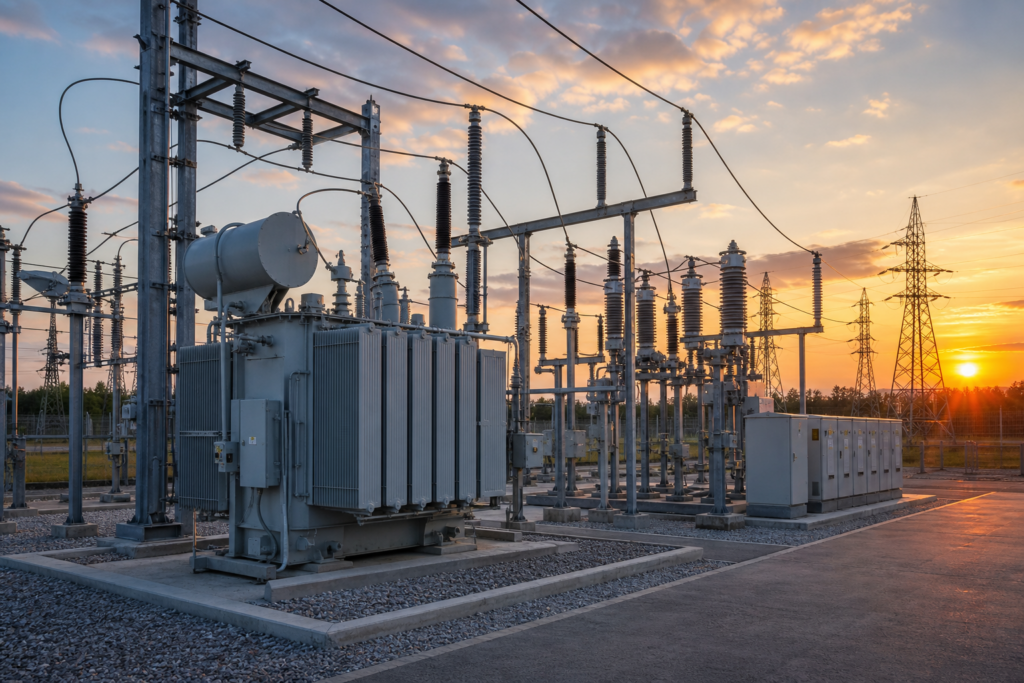
Most substations include transformers, circuit breakers, disconnect switches, busbars, lightning arresters, protective relays, control systems, and fences or barriers. Transformers do the voltage-changing work. Breakers can interrupt current during a fault, while relays detect abnormal conditions and send a trip signal. Modern substations may also use digital sensors and remote monitoring.
How electricity moves through a substation
High-voltage electricity enters through transmission lines and passes through switching equipment. A transformer changes the voltage, and the electricity leaves on lower-voltage distribution feeders. Some substations connect two transmission voltages instead of serving homes directly. Electricity can pass through several substations before reaching a customer.
Are substations dangerous?
Substations contain energized equipment that can seriously injure or kill someone who enters without authorization. Stay outside fences, never climb structures, and keep away from fallen lines. Warning signs and locked gates are there for safety. Utility workers use training, protective equipment, and procedures before working near electrical equipment.
Different types of substations
Transmission substations connect major high-voltage lines. Distribution substations reduce voltage for neighborhoods and businesses. Switching substations redirect power between lines without always changing voltage. Collector substations gather electricity from wind or solar projects before it enters the wider grid.
How substations protect reliability
Protective relays watch for short circuits, overloads, and other abnormal conditions. If a fault is detected, a circuit breaker opens quickly. Operators can then isolate the damaged section and route electricity through another path. This helps keep a local problem from causing a larger outage.
Why substations make a humming sound
Large transformers can produce a steady hum as alternating current creates magnetic forces in their cores and coils. The sound is normal when equipment is operating within its design limits, although utilities inspect unusual noises, smoke, leaks, or signs of damage.
Substations and renewable energy
Wind farms, solar plants, batteries, and other new energy projects often need substations to connect to the grid. The substation changes voltage and coordinates protection so the new source can work safely with existing transmission and distribution lines.
In simple terms, a substation is the grid’s traffic-control and voltage-management point. It helps electricity travel efficiently, changes it to useful levels, and provides the equipment needed to respond when something goes wrong.
What happens during maintenance?
Utilities inspect insulators, conductors, transformer oil, cooling systems, fences, and control equipment. Planned maintenance may require a temporary outage or a rerouted supply. Crews follow lockout and grounding procedures so equipment cannot be energized unexpectedly while they work.
Substations are quiet parts of daily infrastructure, but they perform several essential jobs at once. They manage voltage, switch circuits, detect faults, and connect different parts of the grid. Understanding what a substation does makes the journey of electricity from a power plant to a wall outlet much easier to follow.
What is a substation? Substations also help balance supply and demand. Operators can switch feeders, redirect power, and coordinate repairs. Their equipment is designed for reliability in heat, cold, storms, and heavy electrical loads. Different designs serve rural lines, dense cities, factories, and renewable-energy projects, but the core jobs remain the same: transform, switch, protect, and monitor.
For a related explanation, read What is electricity? on SmallQuestions.
Sources
- National Grid: What Is a Substation?
- OSHA: Substation Glossary
- U.S. Department of Energy: Grid Modernization
Why substations are placed between power plants and homes
Electricity is moved over long distances at very high voltages because that reduces energy losses in transmission lines. The voltage used for long-distance transmission is not the same voltage that should enter a neighborhood or home. Substations help connect those different parts of the grid by changing voltage levels, switching circuits, and providing places where equipment can protect and control the flow of electricity.
A substation can contain transformers, circuit breakers, switches, protective relays, busbars, and monitoring equipment. Not every substation has exactly the same equipment because substations have different jobs. Some connect major transmission lines. Others step voltage down for distribution systems that carry electricity closer to homes and businesses.
Start with what electricity is if you want the basic concept. Then read how electricity gets to your home to see where substations fit in the larger journey from generation to local distribution.
Substations may look like collections of metal frames and wires, but they are important control points. They help make a huge interconnected power network manageable, allowing voltage to be transformed and sections of the grid to be isolated when equipment needs maintenance or protection.